
Activities and interests
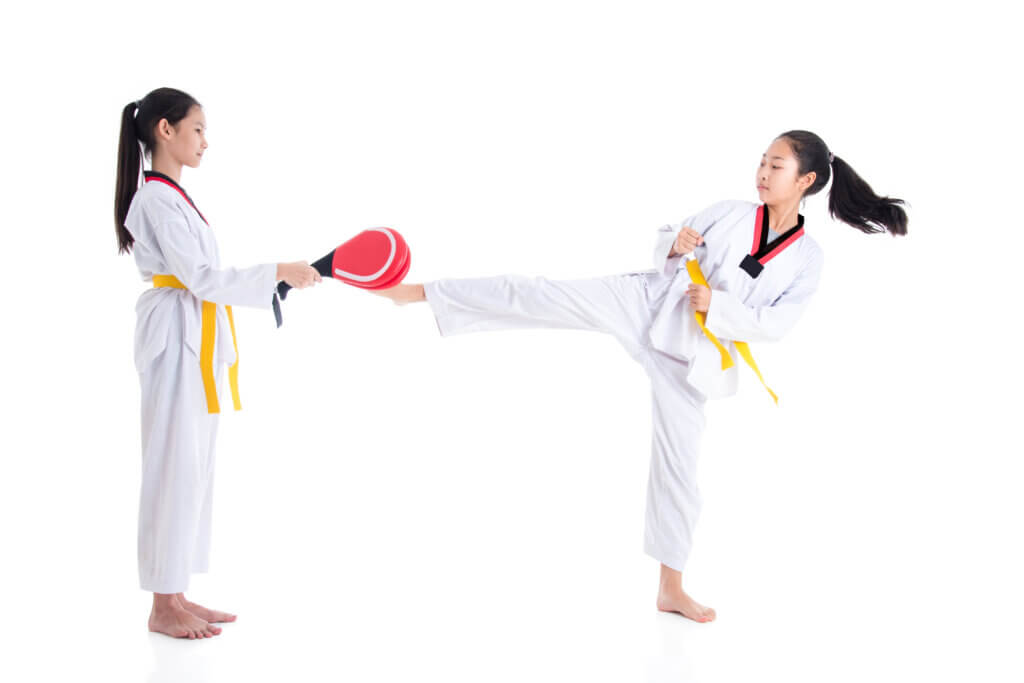
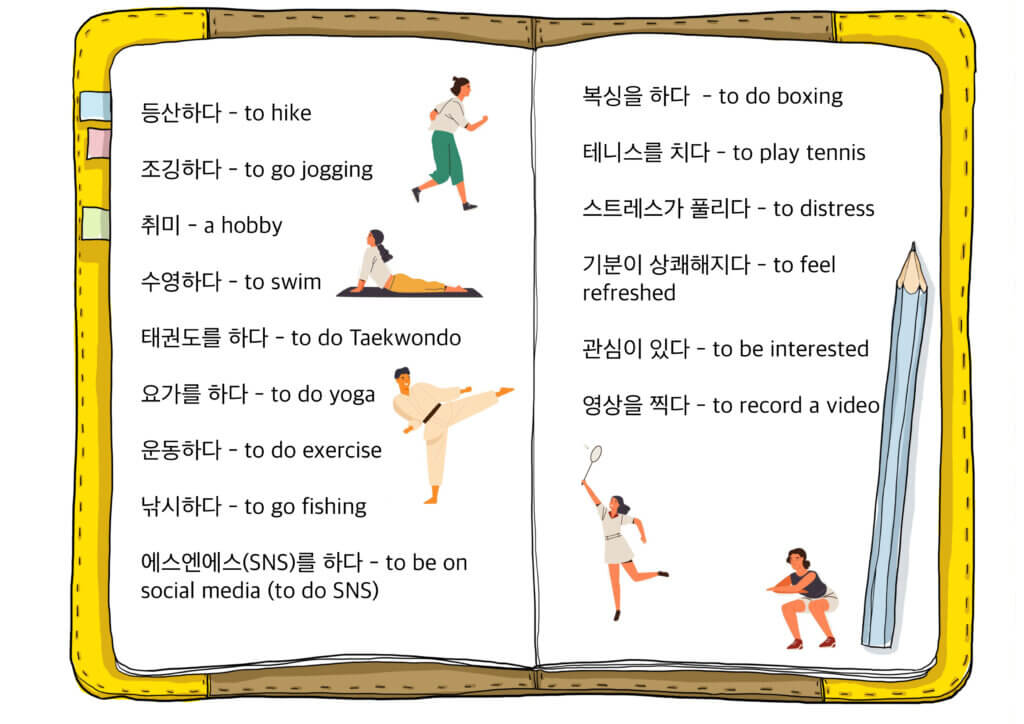
In this lesson, you will learn how to talk about your interests. You will be able to say which activities you like or don’t like. Here is some vocabulary you might find useful. You might want to choose 5-7 different words that you find relevant and try to use them in the speaking activity at the end of the lesson.
Vocabulary
Grammar Points
Verb + 으러 가다 / 러 가다
It expresses going to a place to perform an action, with the action stated first and the place second. It corresponds to “(in order) to” in English. When the verb stems ending in a vowel or ㄹ, ” 러 가다” is used, and when they end in a consonant, “-으러 가다” is added.
E.g 은행에 돈을 찾으러 가요. I go to a bank to withdraw the money.
E.g. 옷을 사러 동대문 시장에 가요. I go to Dongdaemoon market to buy clothes.
Adjective/Verb + -(으)ㄴ/는 것 같다
This expression is used when supposing the occurrence of action or situation that has to occur. It corresponds to “looks like” in English. For present tense adjective, -은 것 같다 is added to the stem with a consonant, and -ㄴ 것 같다 is added to the stem with a vowel, and for the present tense verbs, – 는 것 같다 is added.
E.g. 지금 비가 오는 것 같아요. It looks like it’s going to raining now.
E.g 댄 씨, 오늘 기분이 좋은 것 같아요. Dane, you look like you’re in a good mood.
Verb +(으)ㄹ 줄 알다/모르다
This pattern expresses whether one knows how, or has the ability, to do something. When the verb stems end in a vowel or ㄹ, -ㄹ 줄 알다/ 모르다 is added, and when the verb stems end in a consonant, -을 줄 알다/모르다 is used. It corresponds to “know how to/ doesn’t know how to” in English.
E.g. 딸기잼을 만들 줄 알아요. I know how to make strawberry jam.
E.g. 삼겹살을 먹을 줄 알아요. I know how to eat Korean pork belly barbeque.
Let’s listen!
You are going to listen to a conversation between Yumi and Jenny. They are discussing their likes and dislikes. Listen and answer the following questions:
- What does Yumi like doing?
- What does Jenny like doing?

유미: 제니 씨, 지금 어디 가요?
Yumi: Ms. Jenny. Where are you going now?
제니: 테니스 치러 가요.
Jenny: I’m going to play tennis.
유미: 제니 씨는 운동하는 걸 정말 좋아하는 것 같아요.
Yumi: I think you really like to work out.
제니: 네. 특히, 테니스 치는 걸 좋아해요. 테니스를 치고 나면 스트레스도 풀리고 기분도 상쾌해져서요. 유미 씨는 테니스 칠 줄 알아요?
Jenny: Yes. I especially like to play tennis. After playing tennis, my stress goes and I feel refreshed. Do you know how to play tennis?
유미: 아니요, 못 쳐요. 전 운동을 별로 안 좋아해요. 저는 화장에 관심이 많아요. 그래서 시간이 있으면 인터넷에서 동영상도 찾아보고 가끔 제가 직접 화장하는 영상을 찍어서 올리기도 해요.
Yumi: No, I can’t. I don’t really like exercising. I’m interested in makeup. So when I have time, I look for videos on the Internet and sometimes I record my makeup video and upload it.
Let’s practise!

Using the vocabulary and the grammar point above talk about your interests with your partner. Let the teacher check it for you.
Please choose one activity below and we talk about the types of new leisure activities you want to try in the future.
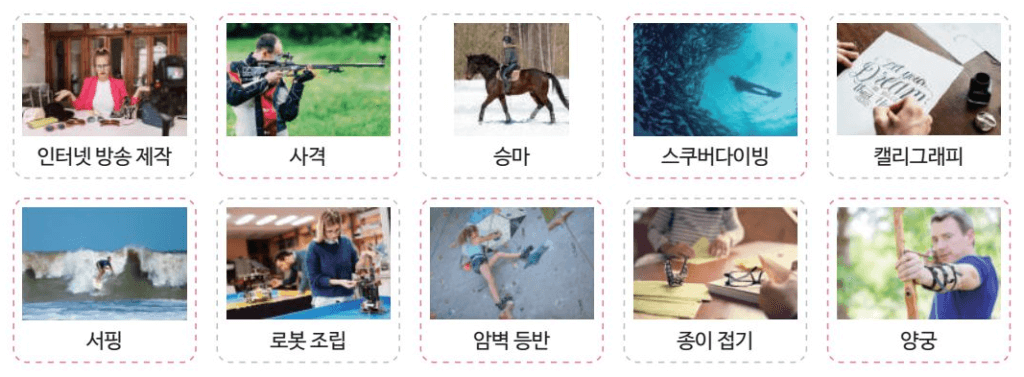
- Why do you want to try that activity?
- What are good points about that activity?
- What do you need to do the activity?
